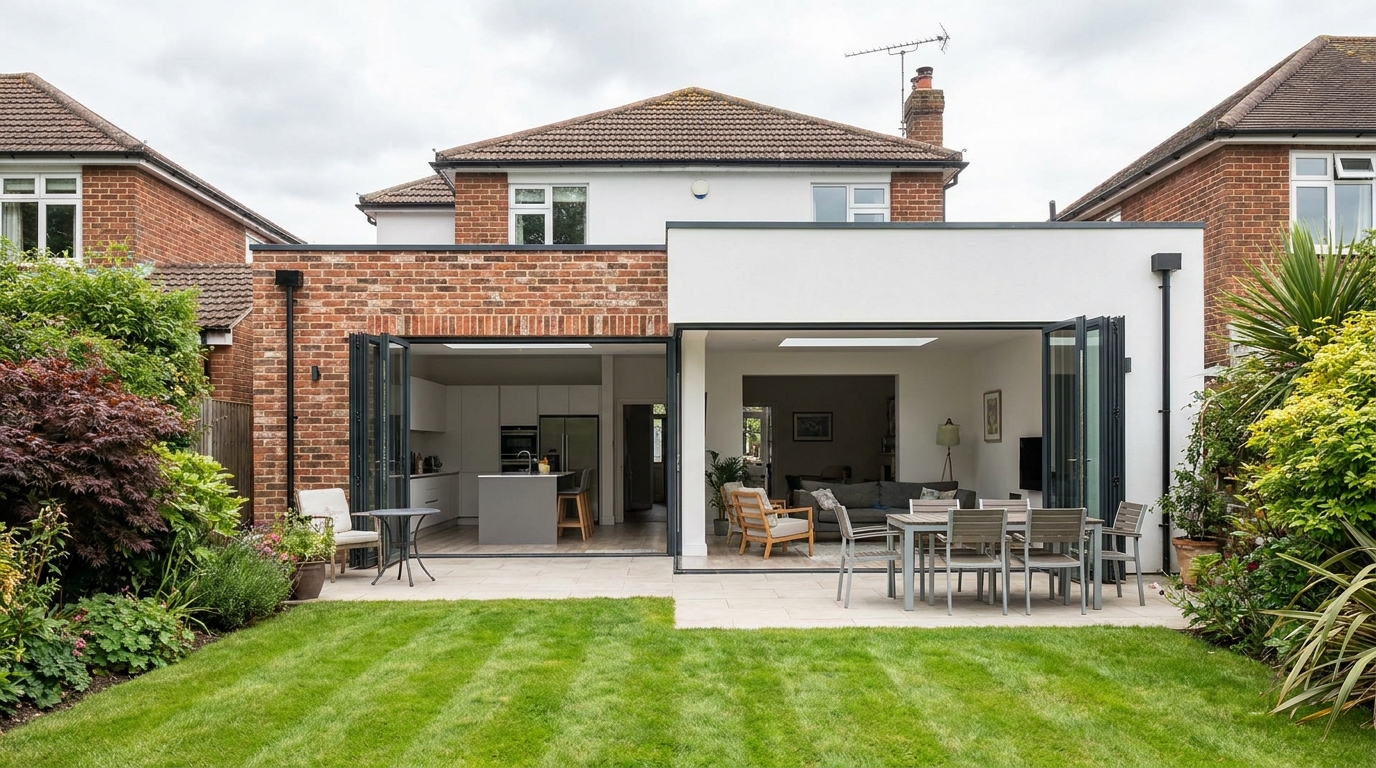
The short answer
You are not legally required to use an architect for a house extension, but most projects benefit from professional design input — especially for planning applications, structural coordination and building regulations compliance. For complex projects, double-storey extensions and those requiring full planning permission, an architect substantially improves the outcome. See planning permission and how to choose a builder.
The title “architect” is legally protected in the UK: only those registered with the Architects Registration Board (ARB) can use it. But many people who design house extensions are not architects — they are architectural technologists, architectural designers or draughtspeople. Whether you need a registered architect, or whether a qualified designer is sufficient, depends on the complexity of your project and what you are trying to achieve. This guide sets out what design professionals actually do on an extension project and how to decide what level of input you need.
Architect for an extension at a glance
- Legally required? No — but professional design input is usually worthwhile
- What an architect adds Design quality, planning strategy, structural coordination
- Typical fees £1,500–£6,000+ for a domestic extension project
- Alternatives Architectural technologist, designer, some builders
- For planning permission? Strongly recommended; improves approval chances
- Building regulations? Drawings needed; engineer separately usually
What design professionals do on an extension project
Whether you appoint a registered architect or an architectural designer, the design professional’s role on a domestic extension typically covers:
- Measured survey: recording the existing house accurately to form the basis of the design.
- Design: developing the layout, form and character of the extension from your brief.
- Planning drawings: producing the drawings needed for a planning application or permitted development certificate.
- Building regulations drawings: detailed technical drawings for building control approval, coordinated with the structural engineer.
- Specification: describing materials, finishes and construction requirements for the builder.
- Contract administration (optional): managing the builder’s contract, certifying payments and inspecting work on your behalf.
| Design professional | Training | Suitable for |
|---|---|---|
| ARB-registered architect | 7 years minimum | All projects; complex design, planning, contract admin |
| Architectural technologist (MCIAT) | Degree + professional practice | Technical drawings, building regs, simpler design |
| Architectural designer / draughtsperson | Varies widely | Planning drawings for straightforward PD extensions |
When is a registered architect most valuable?
A registered architect is most valuable for:
- Complex extensions: double-storey, wrap-around, or projects involving significant structural change.
- Full planning applications: the architect’s understanding of local planning policy, design quality and planning authority expectations significantly improves approval chances.
- Conservation areas and listed buildings: where the design must be sympathetic and the application needs a heritage or design statement.
- Contract administration: if you want independent oversight of the builder’s work, an architect acting as contract administrator protects your interests.
When might a designer be sufficient?
For a straightforward single-storey rear extension that clearly falls within permitted development, a capable architectural technologist or experienced designer can produce the required planning drawings and building regulations drawings at lower cost than a full architectural service. Many builder-led extension companies include a design service. The risks are that the design may not be as spatially resolved, the planning strategy may be weaker if an application is needed, and there is no independent contract administration protecting you during the build.
Structural engineers: always separate
The structural engineer is a separate appointment to the architect or designer. They calculate foundation design, beam sizes, floor and roof structures, and produce the structural drawings and calculations that building control needs. The architect coordinates the structural engineer’s design with the architectural drawings. On a simple extension, structural engineer fees typically run £500–£1,500; on a more complex project, more. See building regulations for how structural calculations are used in the approval process.
This page is general information about design professionals for house extensions. Always check the credentials of any professional you appoint, take up references from previous projects, and ensure they carry professional indemnity insurance. Fees vary widely — get at least two fee proposals before appointing.
Frequently asked questions
What is the difference between an architect and an architectural technologist?
A registered architect (ARB) has a minimum seven years of education and professional practice and is legally protected by the title. An architectural technologist (CIAT) has specialist technical training and is well-suited to producing building regulations drawings. Both can design extensions, but the scope and depth of service differs.
How much does an architect charge for a house extension?
Typically £1,500–£6,000+ for a domestic extension, depending on the service level (planning drawings only vs full contract administration) and the complexity of the project. Fees are negotiable and should be agreed in a clear written appointment before work starts.
Can a builder design my extension?
Some builder-led companies include a design service or work with a designer. This can be cost-effective, but be aware that the design professional is not fully independent of the builder. For a planning application, a genuinely independent designer may give a stronger result.
Do I need an architect for building regulations?
Not legally, but someone must produce the detailed technical drawings and coordinate the structural engineer’s calculations for the building regulations application. An architect or architectural technologist is well-placed to do this; some structural engineers offer a combined service for simpler projects.
Sources & further reading
- ARB — Architects Registration Board: the protected title and the register (arb.org.uk)
- RIBA — Royal Institute of British Architects guidance on appointing an architect
- CIAT — Chartered Institute of Architectural Technologists: role of the technologist
- RICS — Building surveys and professional standards for residential construction
This is general information about house extensions in England and is not planning, structural, legal or financial advice. Costs, timescales and outcomes vary with your design, ground conditions, specification and local authority. Always obtain written quotes and verify planning and building regulations requirements with your local planning authority before committing to any works.