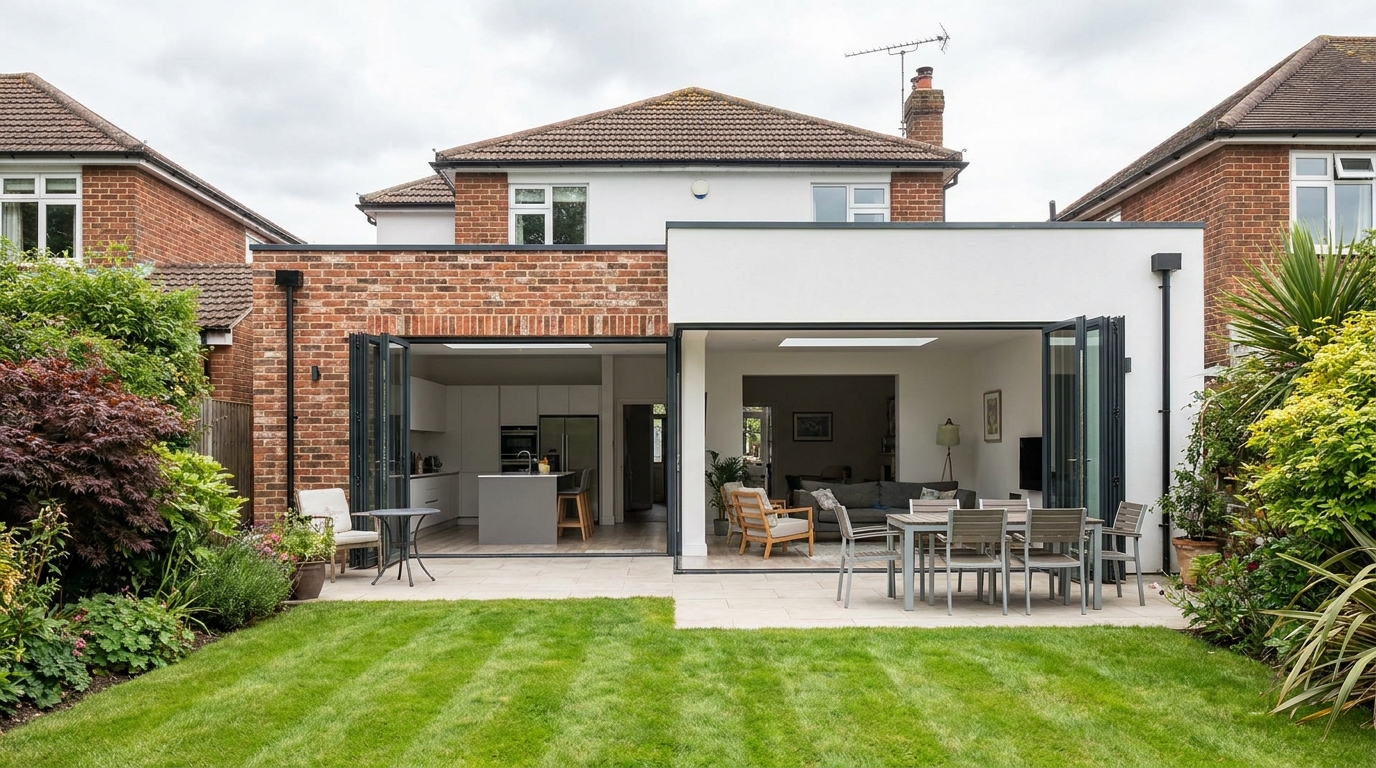
The short answer
A typical single-storey rear extension costs £20,000–£45,000 in the Midlands and North, or £28,000–£55,000 in London and the South East, depending on size and specification. Professional fees, planning and building control add £3,000–£8,000 on top. See the full house extension cost guide for how costs compare across extension types.
Single-storey extensions are the most popular domestic building project in the UK, and they vary enormously in cost: a small side utility room and a large glazed kitchen-diner with underfloor heating both count as single-storey extensions, but one might cost £18,000 and the other £60,000. This guide gives you realistic UK price ranges for 2026 based on typical project sizes and specifications, explains what drives the price and helps you understand what a builder’s quote should and should not include.
Single-storey extension cost at a glance
- Small (10–15 m²) £18,000–£30,000 (Midlands/North)
- Medium (15–25 m²) £28,000–£45,000 (Midlands/North)
- Large (25–40 m²) £40,000–£65,000 (Midlands/North)
- London/SE premium Add 20–40% to above figures
- Cost per m² £1,500–£2,800+ depending on spec
- Professional fees £3,000–£8,000 typically (arch, SE, BR)
What does the build cost cover?
A standard single-storey extension build contract covers:
- Groundwork and foundations: excavation, concrete strip foundations or raft (depending on ground conditions), damp-proof membrane.
- Structure: cavity masonry walls, lintels, structural steelwork if needed for openings between old and new.
- Roof: flat roof (GRP, EPDM or built-up felt) or pitched tiled roof; insulation to meet building regulation U-values.
- Glazing: windows and external doors (typically aluminium or timber bifold or sliding doors to the garden).
- Internal finishes: floor screed or structural concrete, plasterboarding and plastering, first and second-fix electrics, plumbing connections.
It usually does not cover kitchen, bathroom fittings, flooring, decoration, furniture or landscaping — these are typically client-direct purchases or separate contracts. Always confirm exactly what is in and out of the builder’s scope before signing.
| Extension size | Midlands / North | London / South East |
|---|---|---|
| Small (10–15 m²) | £18,000–£30,000 | £25,000–£42,000 |
| Medium (15–25 m²) | £28,000–£45,000 | £38,000–£62,000 |
| Large (25–40 m²) | £40,000–£65,000 | £55,000–£88,000 |
What pushes the price up?
The biggest cost-uplifts beyond a standard single-storey build are:
- Bifold or sliding glazed doors: £3,000–£8,000 for a quality aluminium set.
- Roof glazing / lantern / rooflight: £2,000–£15,000 depending on size and type.
- Underfloor heating: £3,000–£8,000 to add to the extension floor.
- Poor ground conditions: clay, made ground or proximity to trees can require more expensive foundation solutions.
- Structural openings: removing a load-bearing wall to connect the extension to the existing house adds steel beam and temporary propping costs of £2,000–£5,000+.
- Party wall works: if the extension is near a boundary, party wall surveyor fees of £700–£2,000 per side may apply.
Professional fees to budget for
On top of the build cost, allow for: architect or designer (£1,500–£4,000 for a single-storey domestic project); structural engineer calculations (£500–£1,500); planning application fee (£258 in England, 2026 rates); building regulations fee (£400–£1,000 typical for a single-storey extension). A party wall surveyor adds further cost if required. These fees are separate from the build contract.
How to compare quotes
Only quotes based on the same drawn design are meaningfully comparable. A single-page “sketch quote” and a fully priced bill of quantities are different things. Ask each builder to price from the same architect’s drawings, check exactly what is included or excluded, and ask whether the price is fixed or estimated. For guidance on the procurement process and choosing the right contractor, see how to choose a builder for an extension.
All costs on this page are typical illustrations based on trade guidance and market data. Prices vary by region, ground conditions, specification and the specific builders quoting. Always obtain a minimum of three written quotes before committing.
Frequently asked questions
What is a typical cost per m² for a single-storey extension?
Typically £1,500–£2,800 per m² for the build element, depending on specification and region. High-specification projects with glazed roofs and quality fittings can reach £3,000–£3,500+/m². Small extensions cost more per m² than large ones.
Does the single-storey extension cost include the kitchen?
Usually not. A build contract covers structure, roof, glazing, electrics and plumbing connections, but kitchen units, worktops, appliances, flooring and decoration are typically separate client purchases. Always confirm the scope in writing.
How can I reduce the cost of a single-storey extension?
Reducing size, choosing a flat roof rather than pitched, selecting standard-size doors and windows rather than bespoke, and minimising complex structural openings are the main ways to manage cost. Specification choices in kitchen and glazing have the biggest impact on the variable element of the budget.
Do I need an architect for a single-storey extension?
Not legally, but an architect or experienced designer typically adds value by producing drawings that satisfy planning and building control requirements, getting the structural design coordinated, and ensuring the space actually works. See our guide on whether you need an architect for an extension.
Sources & further reading
- RICS — Residential construction cost guidance and building survey standards
- LABC — Building regulations fees and compliance requirements for extensions
- Planning Portal — Planning fees for householder applications in England
- GOV.UK — VAT on construction services: Notice 708
This is general information about house extensions in England and is not planning, structural, legal or financial advice. Costs, timescales and outcomes vary with your design, ground conditions, specification and local authority. Always obtain written quotes and verify planning and building regulations requirements with your local planning authority before committing to any works.