The short answer
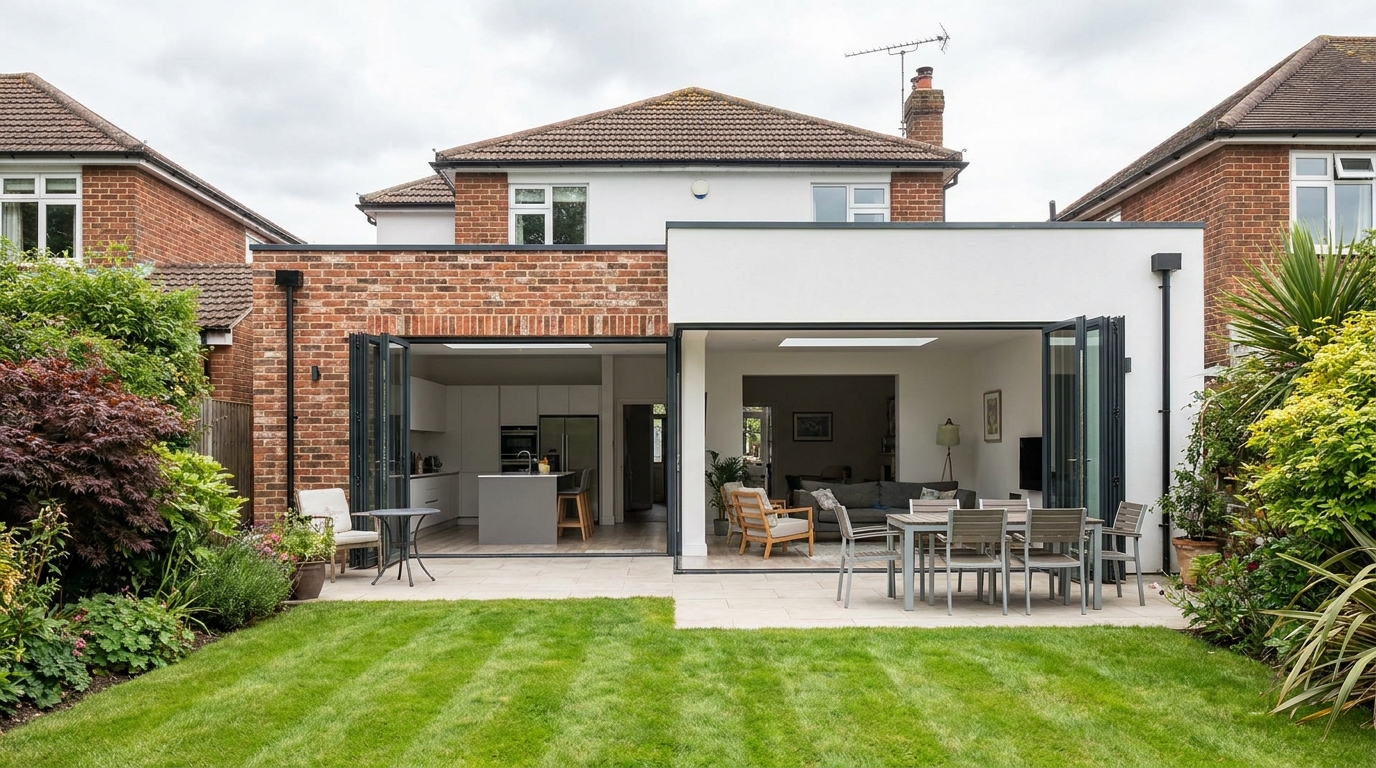
A house extension is a structure built onto an existing home to create additional internal floor space. Extensions range from a simple single-storey rear addition to a large two-storey side or wrap-around structure. Some fall under permitted development and need no planning application; others require full planning permission. See planning permission for extensions and types of house extension for the detail.
Extending a home is one of the most popular ways to add space without moving. Unlike a loft conversion, which uses existing volume, an extension creates entirely new footprint — it increases the ground coverage of the property. That distinction matters for planning rules, building regulations and cost. Whether you are imagining a simple kitchen-diner knocked out to the rear, a full double-storey side addition, or something more ambitious like a wrap-around, the fundamentals are the same: design it properly, check the rules, get the consents, and build it to a standard a building control inspector can sign off.
House extensions at a glance
- Common types Rear, side, two-storey, wrap-around, over-garage
- Typical cost £20,000–£80,000+ depending on size and spec
- Planning permission Often not needed under permitted development
- Building regulations Always required — no exceptions
- Typical duration 8–20 weeks on site, longer with planning
- Value added Typically 5–15% of property value, location-dependent
What counts as a house extension?
An extension is any new structure that is physically attached to and integrated with the existing house, creating usable internal space. A detached garden office or studio is not an extension (it is an outbuilding); a conservatory is technically an extension and subject to the same rules. The term covers a wide range of projects:
- Rear extensions — built onto the back of the house, usually to enlarge a kitchen, dining area or sitting room.
- Side extensions — built on the side return or a side passage, often to widen a narrow kitchen or create a utility.
- Double-storey extensions — add floor space on two levels, delivering the most volume for the footprint cost.
- Wrap-around extensions — combine rear and side to create an L-shaped addition, maximising ground-floor space.
- Over-garage extensions — build living space above an integral or attached garage.
Planning permission vs permitted development
Most homeowners’ first question is whether they need planning permission. In England, many single-storey rear and side extensions fall within permitted development (PD) rights, meaning you can build without making a formal application to the local planning authority. The thresholds vary by house type: for a detached house, a single-storey rear extension can typically extend up to 8 metres from the original rear wall (4 metres for a terraced or semi) under the householder prior approval route. However, PD rights can be removed by Article 4 directions, conservation area designations, or conditions attached to your property’s original planning permission. Always check your specific situation before starting on site.
| Extension type | Typical PD limit (detached) | Typical PD limit (semi / terrace) |
|---|---|---|
| Single-storey rear | Up to 8 m depth | Up to 6 m depth |
| Side extension | Up to half the original house width | Usually requires permission |
| Two-storey rear | Up to 3 m, subject to conditions | Up to 3 m, subject to conditions |
| Wrap-around | Unlikely to qualify as PD | Unlikely to qualify as PD |
Building regulations — always required
Regardless of whether you need planning permission, every extension must comply with building regulations. These cover structural integrity, fire safety, insulation, ventilation, drainage and means of escape. You notify building control before work starts, and an inspector visits at key stages — foundations, damp-proof course, structural frame, insulation and completion. At the end you receive a completion certificate. This is not optional paperwork: without it, you may struggle to sell the property and your buildings insurance could be affected.
What does an extension typically cost?
Costs vary enormously by size, spec and location. A simple single-storey rear extension in the Midlands or North might start around £20,000–£30,000 for a modest 15–20 m²; the same footprint in London or the South East typically costs more. A full double-storey addition can reach £60,000–£100,000+. These are typical illustrations — your own costs depend on ground conditions, materials, specification and your builder’s rates. See house extension cost for a full breakdown. Getting three quotes from experienced, referenced builders and comparing them on a like-for-like basis is the right approach.
How long does an extension take?
Once on site, a typical single-storey extension takes 8–12 weeks to reach practical completion; a double-storey project often takes 14–20 weeks. Add the design and consent stage: permitted development prior approval takes around 42 days; full planning permission takes up to 8 weeks (and sometimes longer). Factor in the architect or designer’s time to produce drawings, and the realistic journey from decision to moving-in can be 6–12 months. See how long an extension takes for a stage-by-stage timeline.
Who does the work?
A typical extension project involves an architect or designer (drawings and planning), a structural engineer (foundations and steels), and a main contractor or builder who manages groundwork, brickwork, joinery, plumbing and electrics. On smaller projects a single experienced builder may manage the whole job and sub-contract the trades they do not directly employ. See do I need an architect? and how to choose a builder for guidance on assembling the right team.
This page is general information about house extensions in England and is not planning, structural or legal advice. Rules vary between local authorities, in Wales, Scotland and Northern Ireland, and for listed buildings and conservation areas. Always check with your local planning authority and engage qualified professionals for your specific project.
Frequently asked questions
Do all house extensions need planning permission?
No. Many single-storey rear and side extensions fall within permitted development rights in England and need no formal planning application, though prior approval may be required for larger ones. Always verify your specific property’s PD rights before starting.
Do I need building regulations approval for an extension?
Yes, always. Building regulations apply to every extension regardless of size or whether planning permission is needed. You must notify building control before work starts and obtain a completion certificate at the end.
How much does a house extension cost in the UK?
Typical costs range from around £20,000 for a modest single-storey addition to £100,000+ for a large two-storey extension, depending on size, location and specification. See our dedicated cost guide for a full breakdown.
How long does it take to build a house extension?
On site, a single-storey extension typically takes 8–12 weeks; double-storey projects often take 14–20 weeks. Add 2–6 months for design, planning and procurement, so the full journey is often 6–12 months from decision to completion.
Sources & further reading
- Planning Portal — Permitted development rights for householders: technical guidance (England)
- LABC (Local Authority Building Control) — Building regulations for home extensions
- RICS — Home surveys and valuation guidance on extensions and added value
- GOV.UK — Planning permission: when you need it and what to do
This is general information about house extensions in England and is not planning, structural, legal or financial advice. Costs, timescales and outcomes vary with your design, ground conditions, specification and local authority. Always obtain written quotes and verify planning and building regulations requirements with your local planning authority before committing to any works.