The short answer
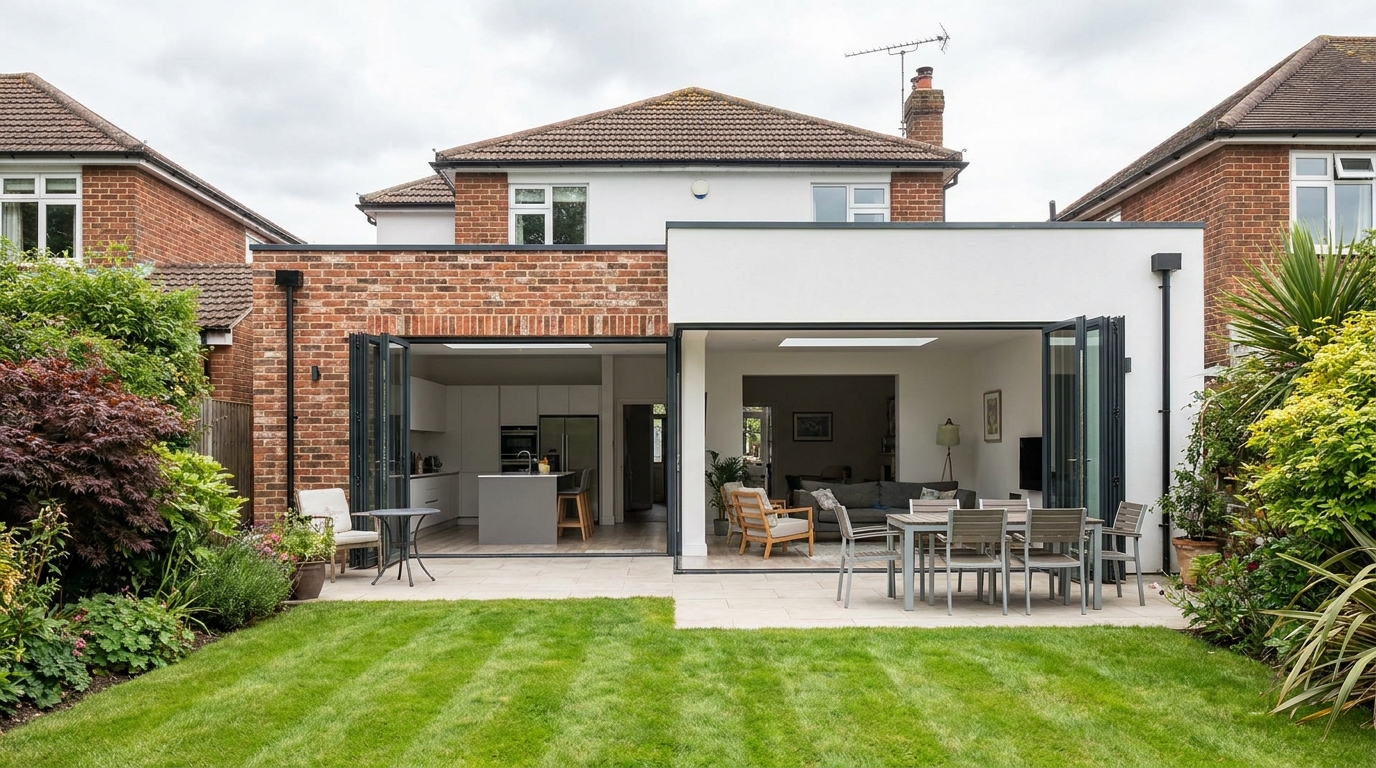
A well-designed, properly built extension that adds bedrooms or significantly improves the living space can add 5–15% to a property’s value in a supportive local market, but the return varies enormously by location, property and what is built. Spending more than the local market can support is the most common mistake. See extension costs and single vs double storey to compare investment with outcome.
The question of whether an extension adds value is impossible to answer with a single figure, because it depends on the property, the local market, what is built, the quality of the build and whether it has been properly signed off with building control. An extension on a terrace in an area where buyers are actively looking for larger family homes can be transformative; the same spend on a property already at the street ceiling price can fail to return its cost. This guide gives you the honest framework for assessing the value question before you commit.
Extension added value at a glance
- Typical added value range 5–15% of property value if well-designed
- Highest return type Bedrooms added via double-storey
- Important caveat Returns are capped by the street ceiling price
- Must-have for any return Building control completion certificate
- Professional view RICS surveyor can advise on property-specific return
- Market dependency Strong in family areas; weaker where demand is for flats
What the research suggests
Studies and estate agent surveys consistently suggest that well-executed extensions can add value, but the range is wide. Adding a bedroom — particularly moving from two to three, or three to four bedrooms — tends to produce the highest return because it shifts the property into a different buyer pool. Open-plan kitchen-dining extensions are popular with buyers and can make a property significantly more sellable even if the measurable added value is more modest. RICS guidance on residential valuations emphasises that any improvement must be considered in the context of the local comparable evidence: what buyers in your specific postcode will pay for the resulting property type.
| Extension type | Typical added value | Why |
|---|---|---|
| Double-storey (adds bedroom) | 8–15%+ of property value | Moves into higher price bracket |
| Single-storey kitchen-dining | 3–8% of property value | Improves lifestyle, saleability |
| Wrap-around (open-plan ground floor) | 5–12% of property value | Transforms family living space |
| Side utility / small addition | Modest to neutral | Improves functionality, less market impact |
The street ceiling problem
The single most important constraint on extension returns is the ceiling price of comparable properties in your street or neighbourhood. If the best three-bedroom extended terraces on your road sell for £350,000 and you spend £80,000 extending, buyers will not automatically pay £430,000 — they will compare your property to others on the market. Local estate agents and RICS-accredited valuers can tell you what the ceiling price for your property type is in your area before you commit. This is the most important conversation you can have before instructing an architect.
When the numbers work
An extension makes the strongest financial case where:
- The property is below the local ceiling price for its type — there is headroom for added value to be recognised.
- Adding a bedroom shifts the property into a higher demand bracket (e.g., from two to three bedrooms).
- The local market strongly values the type of space being added (e.g., an open-plan family kitchen in a family area).
- The total spend, including fees and contingency, is comfortably below the projected added value.
- You will live in the property for long enough to enjoy the improvement regardless of market fluctuations.
When the numbers are weaker
An extension is a harder financial case where the property is already at or near the ceiling price for the street; where the extension adds space that the local market does not highly value; where the build quality is poor or the design does not suit the house; or where the extension lacks planning consent or a building control completion certificate. A poorly designed extension can actually make a property harder to sell even if it adds floor space.
Extension vs moving house
Compare the total cost of extending — build, fees, contingency, disruption — with the stamp duty, agent fees and removal costs of moving to a bigger house. For many families in established areas, extending is significantly cheaper than trading up, even accounting for a modest financial return on the extension. See extension vs moving house for a direct comparison. This page is general information, not financial or property advice; always take professional guidance for your specific situation.
Frequently asked questions
How much value does an extension add to a house in the UK?
Typically 5–15% of the property’s value if well-designed and in a supportive market, but returns are capped by what comparable properties in your area sell for. Adding bedrooms tends to produce the best return.
Does an extension increase council tax?
Potentially yes. A significant extension that increases the habitable floor space or assessed value of the property may trigger a council tax reassessment. Check with your local council before work starts.
Does an extension need to be declared when selling?
Yes. You must disclose the extension, provide the planning consent (if applicable) and the building regulations completion certificate. Missing documents are a common cause of sale delays and renegotiation.
Can an extension reduce a property’s value?
In rare cases, yes — particularly where the design is poor, the extension dominates the garden, or the consents are missing. A good design that works with the house and is properly signed off is less likely to become a liability.
Sources & further reading
- RICS — Residential valuation standards and guidance on improvement value
- GOV.UK — Council tax: when to tell your council about changes to your property
- Planning Portal — Permitted development and planning consent disclosure on sale
- LABC — Building regulations completion certificates and their legal status
This is general information about house extensions in England and is not planning, structural, legal or financial advice. Costs, timescales and outcomes vary with your design, ground conditions, specification and local authority. Always obtain written quotes and verify planning and building regulations requirements with your local planning authority before committing to any works.