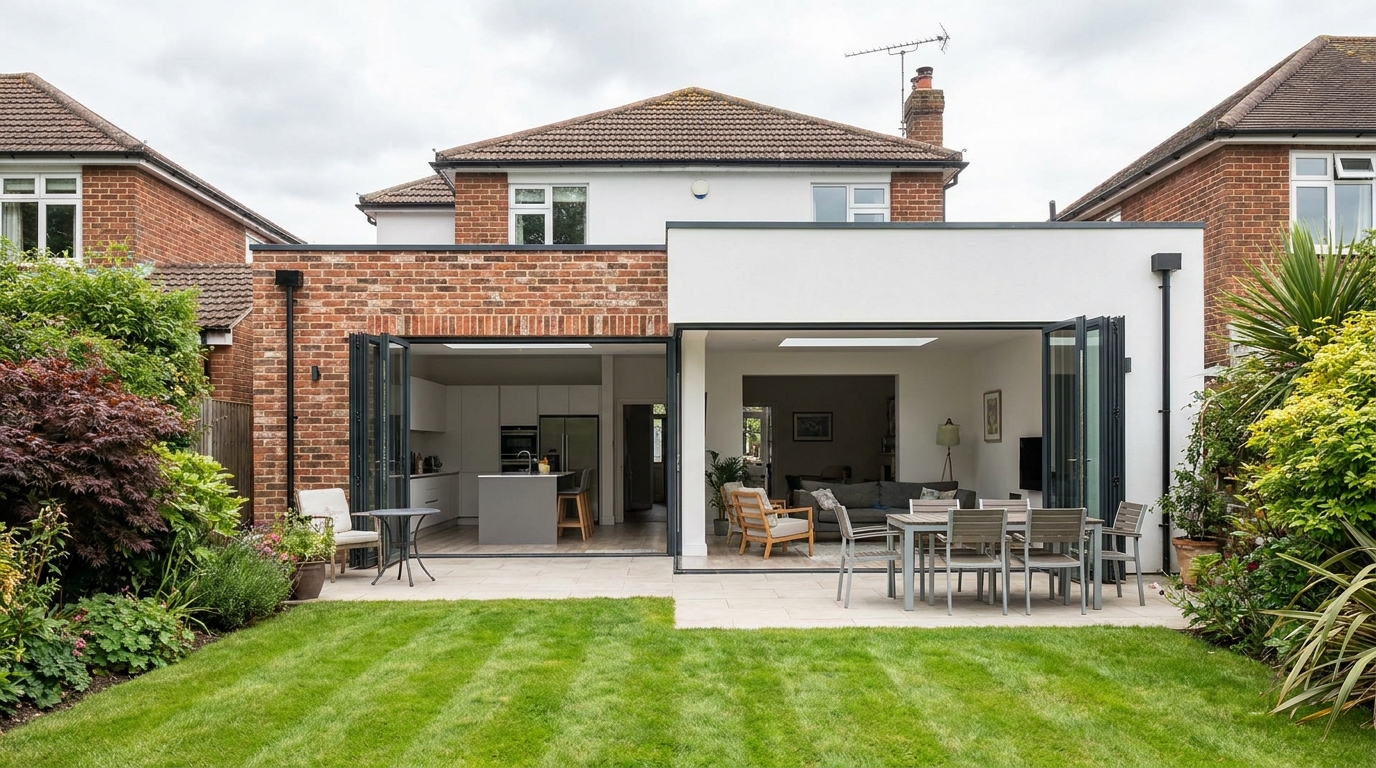
The short answer
A single-storey extension adds one level of new floor space; a double-storey adds two, delivering roughly twice the area for 60–70% more cost. Single-storey extensions are more likely to fall within permitted development; double-storey almost always need full planning permission. Your choice depends on your budget, your site and what space you actually need. See house extension cost and planning permission for the detail.
The single most common question at the start of an extension project is whether to go single or double storey. The two options are not simply “small or big” — they differ in planning risk, structural complexity, disruption and value. A double-storey extension is not always the obvious choice: the extra cost, the full planning application and the effect on neighbours and light are all factors. This guide sets out the real differences so you can weigh them against your own needs and budget.
Single vs double at a glance
- Single-storey typical cost £20,000–£45,000 depending on size and spec
- Double-storey typical cost £40,000–£90,000+ depending on size and spec
- Planning (single) Often permitted development — check thresholds
- Planning (double) Almost always requires full planning permission
- Build time (single) 8–12 weeks on site
- Build time (double) 14–20 weeks on site
What each option actually delivers
A single-storey extension adds floor space at ground level only: extra kitchen, dining, utility, bedroom or bathroom space depending on where it is built. A double-storey extension adds both a ground-floor room and the floor above it — typically a new bedroom and bathroom upstairs alongside a new kitchen or living space below. For many families, the double-storey route turns a two-bedroom house into a four-bedroom one, which is a fundamentally different outcome from a single-storey kitchen extension.
| Factor | Single-storey | Double-storey |
|---|---|---|
| New floor space | One level added | Two levels added |
| Typical gross cost | £20k–£45k | £40k–£90k+ |
| Cost per m² added | Higher (single-layer roof etc) | Lower (shared footprint costs) |
| Planning risk | Lower — often PD | Higher — usually full planning |
| Build time on site | 8–12 weeks | 14–20 weeks |
| Neighbour impact | Lower | Higher (overlooking, light) |
Planning permission: the crucial difference
Single-storey rear extensions benefit most from permitted development (PD) rights: in England a detached house can extend up to 8 metres to the rear under PD (prior approval required), which covers most typical kitchen extensions. Double-storey extensions are almost always subject to full planning permission because they are closer to the rear boundary (typically no closer than 7 metres), affect neighbours’ light and outlook far more, and exceed permitted development thresholds. A refused double-storey planning application can cost months of delay and redesign fees, so it is worth checking with your local authority and possibly appointing a planning consultant before committing to a design.
Structural differences
A single-storey extension is structurally simpler: strip foundations or pad footings, a ground-floor slab or timber floor, cavity walls and a flat, mono-pitch or tiled roof. A double-storey extension needs deeper foundations to take the extra load, a structural floor between levels (usually a timber or concrete deck), and often a steel or timber portal frame or RSJ beam to span openings between old and new. The structural engineer’s input is more significant, and the build sequence is longer. See building regulations for how inspectors check each stage.
Disruption and phasing
Both projects disrupt daily life, but a double-storey build typically involves more time living around a building site, potentially more temporary measures to seal the house, and more complex scaffolding. On the other hand, getting both the ground-floor and first-floor work done in one mobilisation — one set of scaffolding, one team, one set of temporary works — is more efficient than two separate projects done years apart. If you think you will ever want the double-storey, building it now is usually cheaper than the single now, then the upper floor later.
Which adds more value?
A double-storey extension that adds bedrooms or bathrooms typically adds more value in absolute terms than a single-storey kitchen extension, because it can shift the house into a higher price bracket. However, value depends heavily on the existing property, the local market and whether the extension is well-designed and properly signed off with a building control completion certificate. Overspending relative to the street ceiling price limits returns. An RICS-qualified surveyor can advise on added value before you commit to either option. See does an extension add value? for the full picture.
This page is general information about house extensions in England. Planning rules, costs and outcomes vary by location, property type and local planning authority policy. Always get written quotes and verify your planning position with your local authority or a qualified planning consultant.
Frequently asked questions
Is a double-storey extension always more expensive?
In total cost, yes. In cost per m² of added space, often no — the ground-floor foundations and roof are shared costs across two levels, so the cost per square metre is typically lower for a double-storey than a single.
Can I extend single-storey now and add a floor later?
Technically yes, but it is usually more expensive than doing it in one project. The foundations would need to be engineered for the extra load from the start, and you would face a second round of scaffolding, disruption and fees.
Do I need planning permission for a double-storey extension?
Almost certainly. Double-storey rear extensions are only permitted development up to 3 m from the original rear wall with strict conditions, and most double-storey projects exceed those limits or are on semi-detached or terraced homes where PD does not apply.
Which adds more to a house price, single or double storey?
A double-storey extension that adds bedrooms typically adds more absolute value, but the return depends on your local market and whether you are already at the ceiling price for the street. An RICS surveyor can give a property-specific view.
Sources & further reading
- Planning Portal — Permitted development rights for householders: technical guidance (England)
- LABC (Local Authority Building Control) — Building regulations for extensions and structural alterations
- RICS — Guidance on residential valuations and added value from home improvements
- GOV.UK — Planning applications: householder applications guidance
This is general information about house extensions in England and is not planning, structural, legal or financial advice. Costs, timescales and outcomes vary with your design, ground conditions, specification and local authority. Always obtain written quotes and verify planning and building regulations requirements with your local planning authority before committing to any works.