The short answer
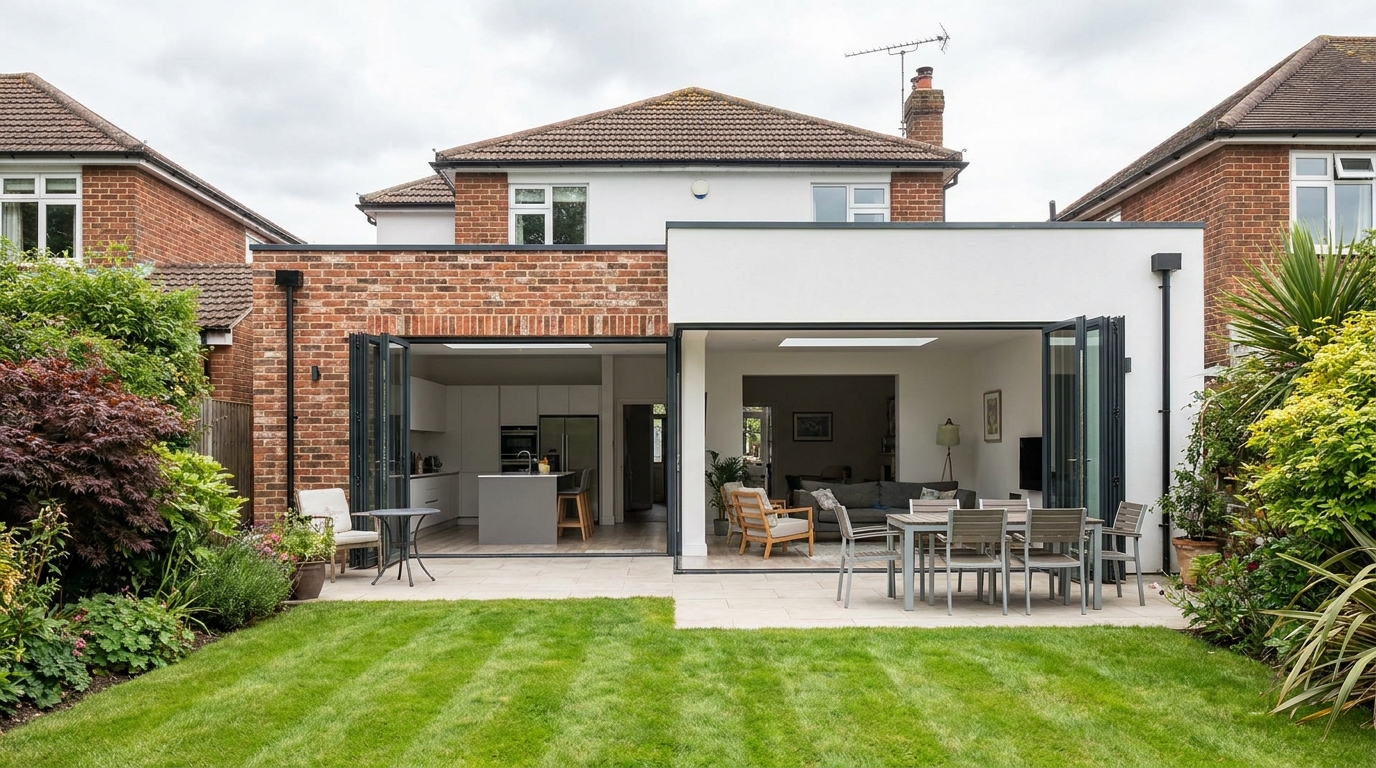
A wrap-around extension combines a rear extension and a side return extension in an L-shape, creating a large open-plan space at the back and side of the house in a single build. It is the most dramatic ground-floor transformation for a Victorian or Edwardian terrace, but almost always requires full planning permission. See typical costs and planning permission rules.
The wrap-around extension has become a staple of the renovation television programme and the architectural salvage Instagram account, and for good reason: it can transform a dark, narrow Victorian terrace into an airy, wide-open contemporary home. But the reality is more nuanced than the before-and-after shot: it is one of the more complex and expensive domestic extension types, it almost always needs a planning application, and the design of the junction between the two wings requires careful detailing. This guide explains what it is, what it delivers and what is involved in building one.
Wrap-around extension at a glance
- What it is Rear + side return combined in an L-shape
- Typical cost £50,000–£120,000+ depending on size and spec
- Planning permission Almost always required — exceeds PD thresholds
- Build time 16–24 weeks on site typically
- Best for Victorian and Edwardian terraces and semis with a side return
- Party wall Likely required where work is near the boundary
What is a wrap-around extension, exactly?
A wrap-around extension is the combination of a side return extension and a rear extension built as a single L-shaped structure. It “wraps around” the back corner of the house, covering both the narrow side passage (the side return) and extending into the rear garden. The result is a significantly larger footprint than either a rear extension or a side extension alone — often creating a single large kitchen-dining-living space of 40–60 m² or more from what was three or four separate, smaller rooms.
The type is most associated with Victorian and Edwardian terraced and semi-detached houses, which were built with a characteristic L-shaped footprint: the main body of the house plus a narrow two-storey rear projection or “outrigger” leaving a side passage open to the sky. Filling in that passage with a single-storey extension connected to a rear extension creates the wrap. On a detached house without a side return, the same concept applies but the driver is typically to use the side of the plot rather than an existing passage.
What space does it create?
The typical outcome is a large, open-plan ground-floor space that replaces the former kitchen, back reception and side passage with a contemporary kitchen-dining-living area running from front to back and side to side. Roof glazing — either a flat glass roof, a lantern or a large ridge rooflight — is commonly used to bring natural light into what was the darkest part of the house: the junction between the two wings, which typically sits furthest from windows. This design element is one of the reasons wrap-around extensions are associated with high-quality contemporary interiors.
Planning permission and permitted development
Wrap-around extensions almost always require full planning permission. The combined depth and width of the extension typically exceeds permitted development thresholds, and the visual impact on the property and neighbourhood is significant. Local planning authorities often require the design to respect the character of the area, and on a terrace may insist on a set-back or a parapet to avoid a dominant visual impact from the street. Starting a wrap-around without the correct planning consent is a serious risk — see extension without planning permission for the consequences.
| Project element | Typical requirement |
|---|---|
| Planning permission | Full householder application almost always needed |
| Building regulations | Always required; key checks on structure, insulation, drainage |
| Party wall notice | Likely needed — extension works near or on boundary |
| Structural engineer | Essential for frame, steels and roof junction |
| Architect | Strongly recommended for design quality and planning success |
What does a wrap-around extension cost?
A wrap-around extension is typically the most expensive single-storey extension type because of its size and structural complexity. Typical costs range from £50,000 for a modest L-shape in the Midlands to £120,000+ for a large, high-specification project in London. The structural steelwork at the junction, roof glazing and the quality of finishes are the biggest variables after size. These are typical illustrations — your actual cost depends on the specific design, ground conditions, specification and location. See house extension cost for a full breakdown of what drives the price and how to get meaningful quotes.
Finding the right team
The design complexity of a wrap-around extension — the structural junction, the roof strategy, the planning argument, the party wall matters — means that professional design advice is particularly valuable. An architect experienced in Victorian and Edwardian houses will know the planning sensitivities, the structural patterns and the details that make the difference between a light, airy result and a dark, cramped one. See how to choose a builder for guidance on selecting the contractor.
This page is general information about wrap-around extensions in England. Planning rules, permitted development thresholds and party wall obligations vary by location, property type and local authority. Always verify your specific position before starting any work.
Frequently asked questions
Do I need planning permission for a wrap-around extension?
Almost certainly yes. Wrap-around extensions combine a rear and side extension, which together typically exceed permitted development thresholds. A full householder planning application is almost always required.
How much does a wrap-around extension cost in the UK?
Typical costs range from around £50,000 for a modest L-shaped addition to £120,000+ for a large, high-specification project. London and the South East tend to cost significantly more than the Midlands or North.
What is the difference between a rear extension and a wrap-around extension?
A rear extension extends only to the back of the house. A wrap-around also fills in the side return passage alongside the house, creating a larger L-shaped footprint and significantly more internal space.
Do I need a party wall agreement for a wrap-around extension?
Very likely, yes. Wrap-around extensions typically work near or on the boundary with a neighbour, triggering the Party Wall etc. Act 1996. You must serve notice on affected neighbours before work starts.
Sources & further reading
- Planning Portal — Permitted development: extensions and additions for householders (England)
- LABC — Building regulations for single-storey extensions: structural and energy requirements
- Party Wall etc. Act 1996 — Statutory rights and obligations for work near boundaries
- RICS — Residential building surveys and party wall dispute guidance
This is general information about house extensions in England and is not planning, structural, legal or financial advice. Costs, timescales and outcomes vary with your design, ground conditions, specification and local authority. Always obtain written quotes and verify planning and building regulations requirements with your local planning authority before committing to any works.