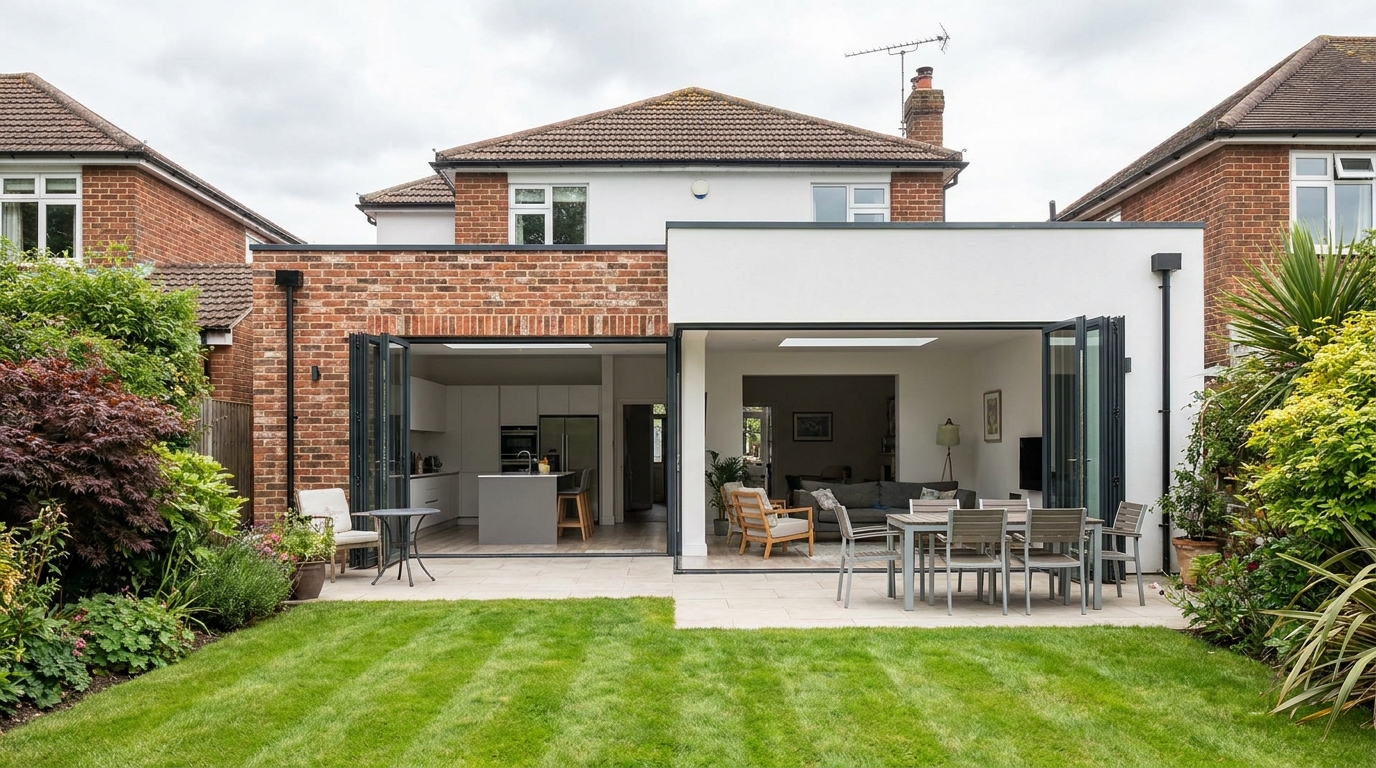
The short answer
An extension creates entirely new footprint; a loft conversion uses existing roof volume. Loft conversions are typically cheaper and less disruptive, but deliver different space — usually a bedroom or bathroom upstairs. Extensions cost more but can transform the ground floor. See extension costs and extension types to compare the options.
When a home feels too small, two of the most popular solutions are extending outwards or converting the loft. Both add floor space; neither is automatically the right choice. The decision depends on what space you need (bedroom upstairs or kitchen-dining room downstairs), your roof shape, your garden, your planning position and your budget. This guide compares the two approaches honestly so you can make the right call for your specific home.
Extension vs loft conversion at a glance
- Extension typical cost £20,000–£90,000+ depending on type and spec
- Loft conversion typical cost £25,000–£65,000 depending on type
- Disruption level Extension: higher; Loft: lower for daily living
- Space added Extension: ground floor; Loft: upper floor bedroom/bathroom
- Planning permission Both often PD; check thresholds for each type
- Garden impact Extension uses garden; loft conversion does not
What each option actually creates
The fundamental difference is where the new space goes. An extension adds a new room or rooms at ground floor (or first floor for a double-storey), typically expanding the kitchen, dining, living or utility area. It can also add bedrooms and bathrooms at first-floor level in a double-storey project. A loft conversion uses the existing roof volume — no new footprint, no garden lost — to create one or two bedrooms and often a bathroom in the roof space. The right choice depends on which type of space you actually need.
| Factor | House extension | Loft conversion |
|---|---|---|
| New footprint? | Yes — garden used | No — uses roof volume |
| Where is space added? | Ground floor (or 1st in double-storey) | Upper floor |
| Typical space type | Kitchen, dining, living, utility | Bedroom, bathroom, study |
| Disruption on site | Higher; affects rear of house | Lower; mainly at roof level |
| Garden lost? | Yes, proportionate to extension | No |
| Structural complexity | Foundation needed; openings needed | Roof strengthening; staircase |
Cost comparison
A loft conversion is often cheaper per m² of added space than an extension, because there is no foundation work and the existing roof structure does most of the structural work. A standard dormer loft conversion (the most common type) typically costs £25,000–£55,000; a full Mansard conversion costs more. A comparable single-storey extension of similar floor area costs £20,000–£45,000, but a double-storey extension that creates the same volume as a loft conversion might cost £50,000–£90,000. The comparison is complex because the space type differs; it is better to compare the total cost against the outcome you actually need.
Planning permission
Both loft conversions and rear extensions often fall within permitted development. For loft conversions, the PD allowance is 40 m³ of additional roof volume (50 m³ for a detached house) for specific types. Hip-to-gable loft conversions and rear dormers on certain houses qualify. Rear extensions under the size thresholds also qualify. Neither qualifies if PD rights have been removed or in conservation areas. For both types, prior approval or a Lawful Development Certificate is advisable to confirm the works are lawful. See planning permission for extensions for the extension rules.
Which adds more value?
Both types add value if well executed. Adding a bedroom — particularly the fourth bedroom — via a loft conversion can move a property into a higher market bracket, as can a well-designed kitchen-diner via a rear extension. RICS-accredited valuers can advise on which improvement would have more impact in your local market. See does an extension add value? for the value framework. The honest answer is: it depends on your property and what local buyers are paying for.
This page is general information about extensions and loft conversions in England. Costs, planning rules and outcomes vary significantly by property type, location and specification. Always obtain professional advice and written quotes before making a decision.
Frequently asked questions
Is a loft conversion cheaper than an extension?
Often yes per m² of space added, because there is no foundation work. A standard dormer conversion typically costs £25,000–£55,000; a comparable extension can cost similar amounts, but a double-storey extension delivering the same total space costs significantly more.
Which adds more bedrooms, an extension or a loft conversion?
A loft conversion typically adds one to two bedrooms and a bathroom in the roof space. A double-storey extension can also add bedrooms above, plus a ground-floor room. The right choice depends on whether you need the space upstairs or at ground level.
Is a loft conversion less disruptive than an extension?
Generally yes for daily living. Most of the loft conversion work happens at roof level, and the family can usually remain in the house throughout. An extension involves more disruption to the rear of the house and often temporary loss of the kitchen or rear access.
Can I do both a loft conversion and an extension?
Yes, in sequence or simultaneously. Many families extend the ground floor first and convert the loft later, or combine both in a single large project. Doing both in one project reduces mobilisation costs but increases the total spend and disruption.
Sources & further reading
- Planning Portal — Permitted development for loft conversions and extensions (England)
- LABC — Building regulations for loft conversions and house extensions
- RICS — Residential valuations and added value from home improvements
- GOV.UK — Planning permission: householder applications and permitted development
This is general information about house extensions in England and is not planning, structural, legal or financial advice. Costs, timescales and outcomes vary with your design, ground conditions, specification and local authority. Always obtain written quotes and verify planning and building regulations requirements with your local planning authority before committing to any works.